Best AI Gadgets That Actually Feel Useful
If you’ve followed technology news over the past few years, you’ve probably noticed something. Every few months, a new AI gadget appears and promises to change the world. A startup launches a device. Tech YouTubers rush to review it. Social media gets excited. People start talking about how smartphones are about to become obsolete.
Then six months later, nobody mentions it anymore. I’ve seen this happen more times than I can count. The reality is that a lot of technology sounds amazing during a product launch, but feels far less impressive once it becomes part of everyday life. That’s especially true with AI gadgets.
Some look futuristic, while some generate headlines. But very few actually become products that people continue using long after the novelty wears off. What’s interesting in 2026 is that we’re finally starting to see AI gadgets mature.
The conversation isn’t just about what AI can do anymore. It’s about whether it can genuinely make life easier. And honestly, that’s the only thing that really matters.
Smart Glasses Are Starting to Make Sense
I remember the first time I saw smart glasses years ago. The technology looked impressive. The demonstrations looked impressive. But I couldn’t stop wondering who would actually wear them every day.
That was the biggest challenge. People thought smart glasses were cool. They just weren’t convinced they were useful. Today, that situation is changing.
Modern smart glasses can provide directions while you’re walking, translate conversations, answer questions, and display useful information without forcing you to constantly pull out your phone. The interesting part isn’t the technology itself. It’s how natural it’s starting to feel.
Instead of stopping every few minutes to check a screen, information simply appears when you need it. For travelers, commuters, and people who spend a lot of time moving around, that convenience can be surprisingly valuable. For the first time, smart glasses feel less like a science project and more like a practical tool.
AI-Powered Earbuds Do More Than Play Music
Most people already own earbuds. They’re hardly exciting anymore. But AI is quietly making them more useful. Modern earbuds can reduce background noise more intelligently, improve call quality, translate conversations, and even help users focus in noisy environments.
I think this is one of the reasons people are embracing AI features in audio devices. The technology doesn’t require learning anything new. You simply put the earbuds in and continue with your day. The experience feels familiar. And that’s often the sweet spot for successful technology.
Robot Vacuums Have Finally Grown Up
There was a period when robot vacuums felt more like entertainment than cleaning devices. People would watch them bounce around furniture, get trapped under tables, and occasionally disappear into another room.
They were fun to watch. Less fun to rely on. Today’s AI-powered models are much smarter. They map rooms accurately. Avoid obstacles. Recognize furniture. Navigate around pet bowls and charging cables. Remember layouts.
The funny thing is that nobody buys a robot vacuum because they’re excited about artificial intelligence. They buy one because they don’t feel like vacuuming. That’s what makes it one of the most successful AI gadgets available today.
It solves a real problem. And it solves it quietly.
Smart Home Cameras Are Becoming Less Annoying
If you’ve ever owned an older security camera, you know the frustration. A tree branch moves. Notification. A cat walks by. Notification. A shadow changes. Another notification.
Before long, you start ignoring alerts altogether. That’s not particularly helpful. AI is changing that. Modern smart cameras are becoming much better at understanding what’s happening.
They can often distinguish between people, vehicles, animals, and other movement. As a result, homeowners receive fewer meaningless alerts and more useful information.
It sounds like a small improvement. But when you’re receiving notifications every day, small improvements matter.
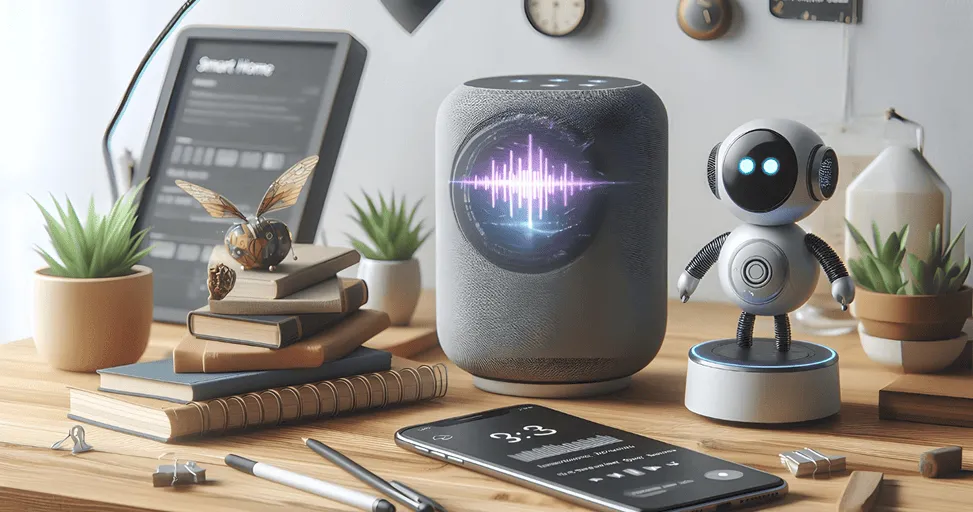
AI Voice Assistants Are Finally Becoming Better Listeners
Voice assistants have been around for years. Most people have asked one about the weather, set a timer, or played a song. The problem was that conversations often felt robotic. You had to phrase requests in a very specific way.
And if you didn’t, things got awkward quickly. AI is making these interactions feel more natural. Voice assistants are becoming better at understanding context, remembering previous requests, and responding in a way that feels less mechanical.
We’re still not at the point where talking to a voice assistant feels like talking to another person. But we’re much closer than we were a few years ago. And for many households, that improvement is enough to make these devices genuinely useful.
AI Wearables Are Becoming Everyday Health Tools
One category that’s grown significantly is wearable technology. Smartwatches are no longer just counting steps. Many now help users monitor sleep quality, heart health, activity patterns, stress levels, and overall wellness.
What I find interesting is that people rarely buy a smartwatch because they’re excited about AI. They buy one because they’re trying to:
Sleep better
Exercise more
Understand their health
Stay active
The AI simply helps deliver useful insights. And that’s usually when technology works best. When the user focuses on the benefit rather than the technology behind it.
AI Note-Taking Gadgets Are Saving People Hours
One category that has quietly become popular is AI-powered note-taking tools. These devices can record meetings, lectures, interviews, and conversations while automatically creating summaries and organized notes.
For students, business professionals, journalists, and content creators, this can save an enormous amount of time. I’ve spoken to people who started using these tools out of curiosity and quickly became dependent on them.
Not because they’re flashy. Because they eliminate repetitive work. And that’s one of the most valuable things technology can do.
The Best AI Gadgets Don’t Feel Like AI Gadgets
Here’s something I’ve noticed. The most successful AI products rarely advertise themselves as AI products once people start using them.
Nobody wakes up excited about artificial intelligence. People wake up wanting easier mornings, less work, better communication, cleaner homes, improved productivity, safer homes, and more free time.
The AI simply helps achieve those goals. And that’s why some gadgets succeed while others disappear. The successful ones solve everyday problems. The unsuccessful ones simply demonstrate technology.
Most People Don’t Need More Technology
This might sound strange in a technology blog, but it’s true. Most people aren’t looking for more gadgets. They’re looking for fewer hassles. That’s an important distinction.
A product isn’t useful because it contains AI. It’s useful because it removes frustration from everyday life. That’s why robot vacuums continue growing in popularity. That’s why smart cameras are improving. That’s why wearables keep evolving. The focus has shifted from showing off technology to solving practical problems.
The Future of AI Gadgets Looks More Realistic
A few years ago, AI gadgets often felt like products designed for headlines. Today, they feel increasingly designed for real life. That’s a good thing.
The future probably won’t be filled with dramatic science-fiction devices replacing everything we own. Instead, it’ll likely involve existing products becoming a little smarter, a little more helpful, and a little less demanding. And that’s probably what most people want.
Finally, the best AI gadget isn’t the one with the most advanced technology. It’s the one that quietly makes your day easier without constantly reminding you that it’s there.
Trending Blogs
Best Android Settings to Change After Buying a New...
Set up your new Android phone properly with key settings for notifications, permissions, display, security, backup, and battery.
iOS vs Android in 2026: Which Is Better for You?
Learn the practical differences between iPhone and Android phones so users can decide which platform fits their needs better.
Best iPhone Settings to Change for Privacy in 2026
Improve iPhone privacy by reviewing app permissions, location sharing, ad tracking, Safari settings, and security recommendations.
Apple Intelligence in iOS: What It Can Actually Do
Explore what Apple Intelligence can do on supported iPhones and how it may improve productivity, communication, and personalization.

iOS 26 Features Explained for Everyday iPhone User...
Learn how iOS 26 changes the iPhone experience with updated visuals, smarter tools, better communication, and everyday convenience features.
Android Foldables: What Users Should Know Before B...
Compare foldable phone benefits and drawbacks, including screen durability, app support, multitasking, battery life, cameras, and price.